
As a Vice President and Senior Project Manager, I spend a lot of my time looking at blueprints, managing timelines, and finding the right people for high-stakes roles. But when I step away from the office and onto the sidelines, I realize that college soccer coaches are doing the exact same thing. You aren't just looking for a kid who can kick a ball; you’re looking for a project manager for your defensive line. You’re looking for a future leader who can handle a balance sheet as well as they handle a corner kick.
Finding that "total package": the elite goalkeeper who is also a high-achieving academic: is like finding a needle in a haystack. But after watching the recruitment landscape shift, especially with the transfer portal and new NCAA rules, I’ve realized there’s a formula to it. Whether you are coaching at the D1 level or building a powerhouse JUCO program, the criteria for the modern keeper have changed.
If you’re wondering how to get recruited for college soccer goalkeeper or, from a coach's perspective, how to find the next great one, here is my 5-step guide to identifying elite talent that fits the business-major mold.
1. Assessing Technical Mastery (Beyond the Highlight Reel)
We’ve all seen the highlight tapes filled with flying saves and dramatic dives. They look great on Instagram, but as a coach, you know that’s only 10% of the job. True elite goalkeeper recruitment starts with the boring stuff: footwork, hand shape, and set position.
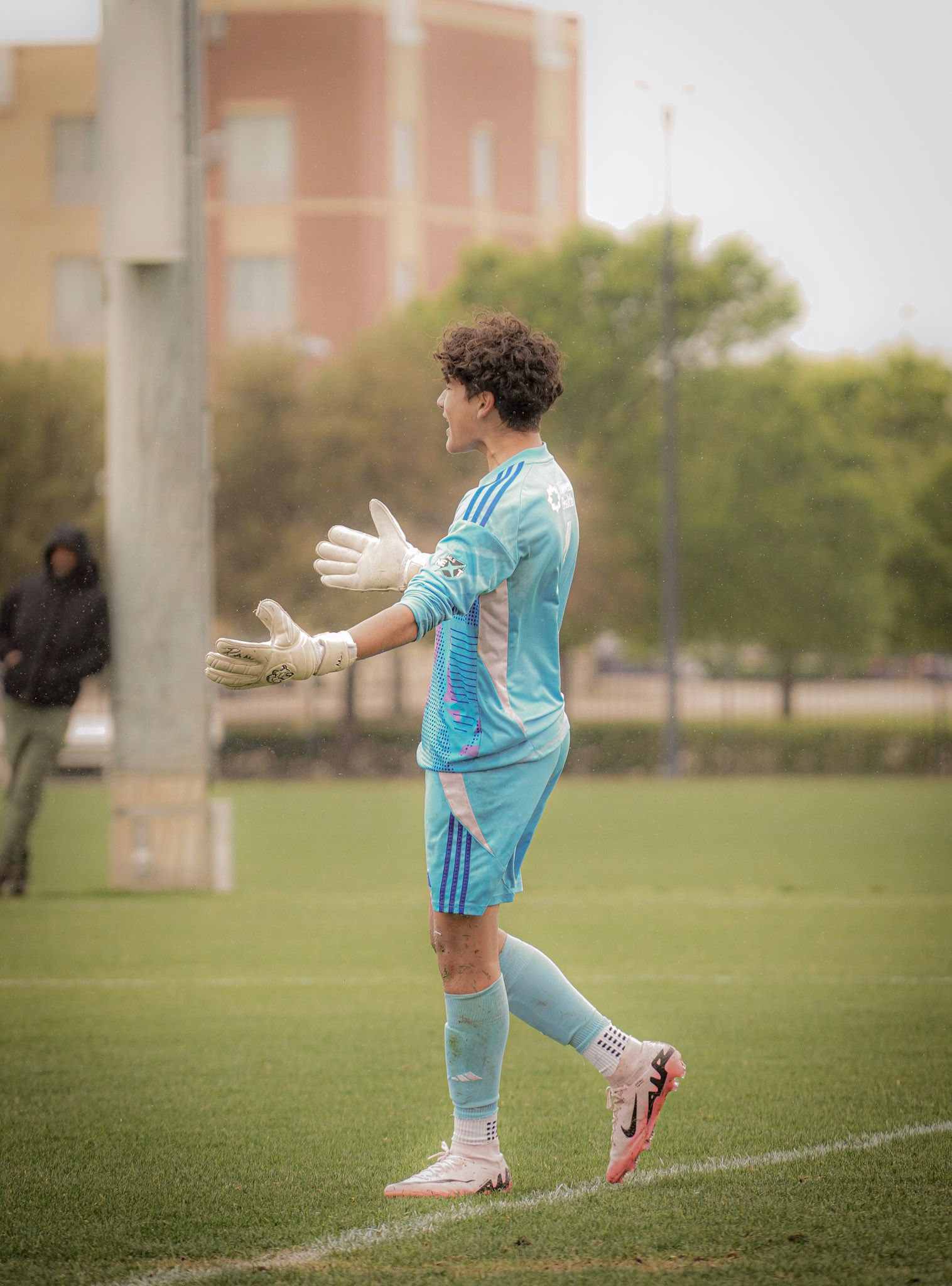
When I watch Eduardo Luna play, I don't just look at the spectacular saves. I look at how he prepares for the shot. Is he balanced? Are his hands ready? An elite 2011 goalkeeper like Eduardo is already showing the technical discipline of a player years older. You want a keeper who catches the balls they should catch and parries the ones they can’t into safe zones.

In elite recruitment, distribution is the new shot-stopping. Can the keeper hit a 40-yard diagonal ball to the winger's chest? Can they play out of the back under pressure? If a player has a "Business Major" mindset, they understand efficiency. They don't just kick the ball away; they initiate an attack.
2. Evaluating Field IQ and the "8-Second Rule"
The game is faster than ever. With the talk of the NCAA 8-second rule and the increasing pressure on keepers to act as an 11th outfielder, Field IQ is non-negotiable.
A goalkeeper with a high IQ understands the geometry of the field. They anticipate the through-ball before it’s even kicked. They understand when to slow the game down and when to trigger a counter-attack. This is where the "Business/Finance" brain kicks in. Just like a trader on Wall Street, a keeper has to process a thousand data points in a split second and make the highest-percentage play.

When we talk about college soccer business major recruits, we are talking about students of the game. Eduardo spends hours with his film coach, not just looking at his saves, but looking at his positioning. Why was there a gap in the defense? How could one step to the left have made that save easier? That analytical approach is exactly what translates to a Finance minor. They aren't just playing; they are calculating.
3. Leadership and Communication: The "CEO" of the Pitch
You can have the best reflexes in the world, but if you’re quiet, you’re a liability. An elite goalkeeper must be the loudest person on the field, but they have to be saying the right things.
I always tell Eduardo that he is the CEO of that 18-yard box. His job is to manage his "employees" (the defenders) so that he doesn't have to work as hard. If he organizes the backline correctly, he shouldn't have to make a diving save.

Coaches, look for the player who is constantly talking, pointing, and encouraging. Look for the keeper who takes command of the team huddle. Leadership isn't just about yelling; it’s about inspiring confidence in the ten guys in front of you. When you find a keeper who can lead a group of teenagers through a high-pressure PK shootout, you’ve found someone who can eventually lead a boardroom.
4. Academic Alignment (The Business/Finance Focus)
This is where the "Perfect Fit" part of the title comes in. The transfer portal is a mess right now, and one way to avoid losing players is to recruit kids who are academically locked in.
If a player tells you they want to be a Business major with a Finance minor, you know a few things about them immediately:
- They are goal-oriented.
- They are comfortable with numbers and strategy.
- They are thinking about their "ROI" (Return on Investment) for their four years of college.
Recruiting a player like Eduardo Luna means you are getting a kid who treats his GPA like his clean-sheet record. He knows that his career on the pitch and his career in the business world are two sides of the same coin. For coaches at top academic institutions, this alignment is the secret sauce. You don't have to worry about these kids being ineligible; they are usually the ones setting the curve in Econ 101.
5. Long-Term Commitment and the Growth Mindset
The final step is looking for "grit." The recruitment process is long and often discouraging. An elite goalkeeper doesn't get rattled by a bad goal or a missed recruitment opportunity. They use it as fuel.
I’ve watched Eduardo handle the highs of winning major tournaments and the lows of a tough loss. What stays consistent is his work ethic. Whether it’s extra sessions with a private trainer or staying late to work on his goal kicks, that commitment is what separates the "good" from the "elite."

As a coach, you want a player who is a "buy and hold" asset. You want someone who will grow in your program for four years, getting stronger, smarter, and more vocal every season. A growth mindset is the hallmark of a successful entrepreneur and an All-American goalkeeper.
Why This Matters for the Class of 2029
I know it seems like 2029 is a long way off, but in the world of elite goalkeeper recruitment, the clock is already ticking. Coaches are already looking at the 2011 birth years, trying to spot the physical markers and the mental toughness required for the next level.
If you are a coach looking for that rare blend of a "shot-stopping CEO" and a "Finance-minded playmaker," you have to look beyond the basic stats. You have to look for the player who treats every practice like a professional internship and every game like a final exam.
Eduardo is on that path. He’s putting in the work on the grass and in the classroom because he knows that the "Perfect Fit" doesn't just happen: it’s built.
To my fellow parents and coaches: the landscape of college soccer is changing, but the value of a high-IQ, high-character goalkeeper will never go out of style. Let's keep pushing these athletes to be as sharp with their minds as they are with their hands.
Elite 2011 Goalkeeper looking for college scholarship. Class of 2029.
Leave a Reply