
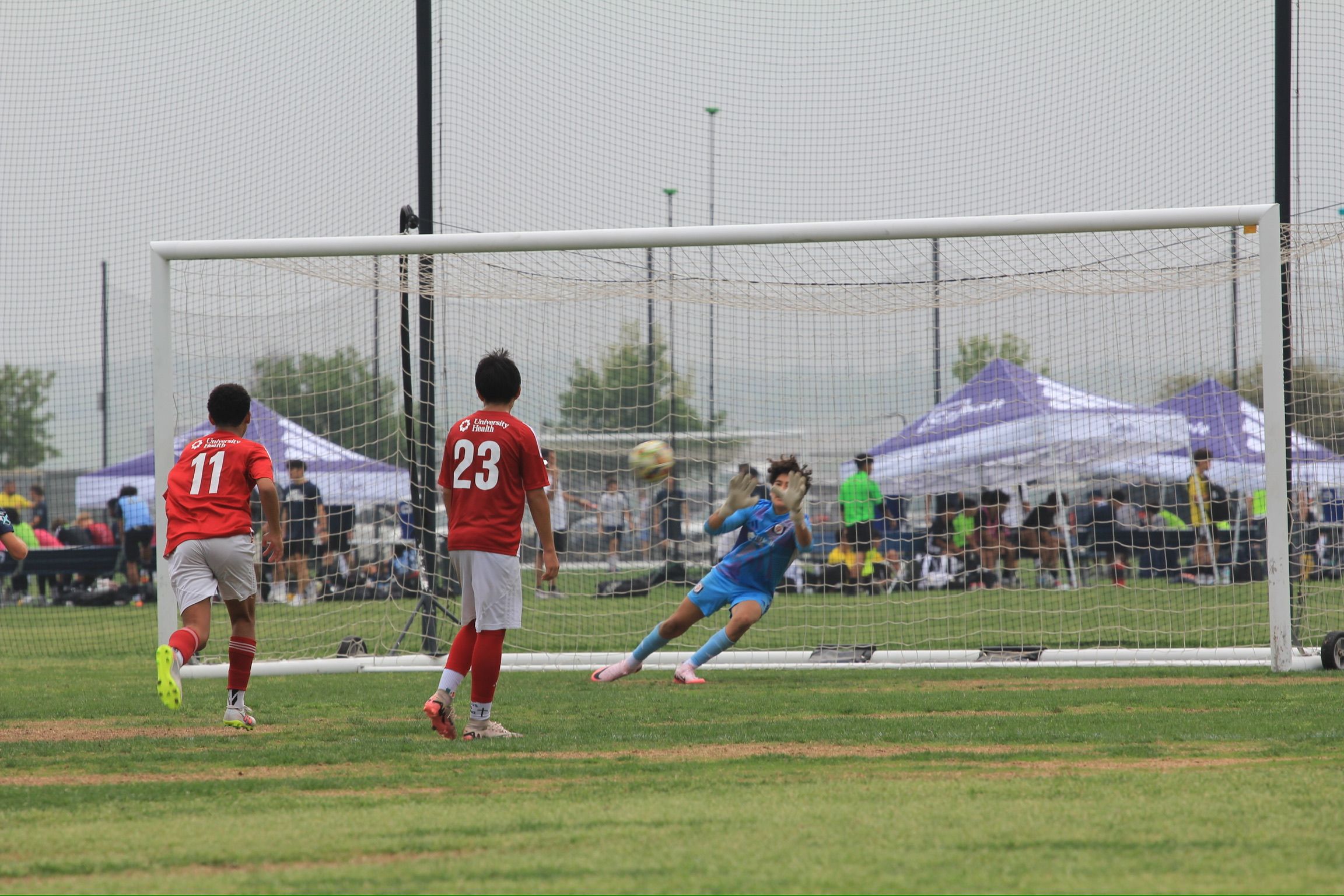
Most people will tell you that the path to elite soccer is a marathon, not a sprint. We’re usually told that if you want to reach the highest levels of the youth game: especially in a position as specialized as goalkeeping: you need to start in a professional academy by age nine or ten. You’re supposed to spend years grinding through club tiers, slowly moving from local leagues to regional divisions, and eventually, if you’re lucky, into the elite platforms.
Eduardo Luna decided to rewrite that script.
In just twelve months, Eduardo went from playing recreational soccer at the local YMCA to competing in the MLS Next Homegrown division. For those who follow the American soccer pyramid, that’s a leap that shouldn't be possible. It’s the equivalent of going from a casual Sunday jog to running an Olympic sprint in the blink of an eye.
But this isn't just a story about a lucky break. It’s a case study in what happens when extreme dedication meets a high ceiling. For college coaches currently navigating the elite goalkeeper recruitment landscape, Eduardo’s story is a prime example of why looking at a player’s "trajectory" is often more important than looking at their "history."
The Starting Point: Saturday Mornings at the Y
A little over a year ago, Eduardo was like thousands of other kids. He enjoyed the game, he had natural athleticism, but he wasn’t part of the "system." He was playing YMCA rec soccer: a place for fun, community, and exercise, but rarely a scouting ground for professional academies.
At the YMCA level, the stakes are low. The coaching is often developmental and volunteer-led. While it’s a great place to fall in love with the sport, it’s a world away from the tactical complexity and physical demands of the MLS Next environment.
So, how did the transition start? It started with a realization. Eduardo didn't just want to play; he wanted to dominate. He saw the gap between where he was and where he wanted to be, and instead of being intimidated, he used it as fuel.

The Year of Total Immersion
To bridge a gap that usually takes five years to close, Eduardo had to compress his development. This meant his "off-season" didn't exist. It meant training when others were resting and focusing on the technical nuances that most keepers learn over half a decade.
The college soccer recruiting process for goalkeepers is unique because the position is so mental. You can have all the height in the world, but if you don't have the footwork, the distribution, or the "command of the box," you won't make it at the D1 level. Eduardo spent his year focusing on three specific pillars:
- Technical Foundation: He had to rebuild his shot-stopping mechanics from the ground up. This meant thousands of repetitions on diving technique, hand positioning, and parrying.
- Physical Explosiveness: Transitioning to the MLS Next Homegrown division meant facing shots that were faster and more precise. He worked tirelessly on his lateral quickness and his vertical leap to ensure he could cover the frame of a full-sized goal against elite attackers.
- The Mental Game: This is where Eduardo truly separated himself. In rec soccer, a mistake is just a mistake. In the Homegrown division, a mistake can cost your team the game. He developed a "short memory" and the leadership skills required to organize a high-level defense.
Breaking into the MLS Next Homegrown Division
When the opportunity to trial for an MLS Next Homegrown side came up, many would have thought it was too early. Most players coming from a rec background would be overwhelmed by the speed of play. In the elite tiers, the ball moves faster, players think three steps ahead, and the physical contact is intense.
Eduardo didn't just survive the transition; he thrived.
His rapid improvement caught the eyes of scouts who are used to seeing plateaued talent. In the world of elite goalkeeper recruitment, scouts look for "projectability." They want to see how much better a player can get. Because Eduardo showed such a steep upward curve in just one year, his potential ceiling became a major talking point. He wasn't just a kid who could stop balls; he was a sponge who could learn a month's worth of coaching in a single week.

Why This Matters for College Coaches
If you are a college coach or a scout, Eduardo Luna represents the "X-Factor" in the college soccer recruiting process for goalkeepers.
Typically, the recruiting process looks at a player’s resume over four years of high school. But Eduardo’s resume is different. It shows an unprecedented rate of development. If he can go from the YMCA to MLS Next in twelve months, where will he be after two years in a high-intensity college program?
Here are the three reasons why Eduardo’s rise is a signal of future success at the collegiate level:
- Adaptability: He has already proven he can jump into a significantly higher level of play and adapt almost instantly. This is a crucial trait for a freshman goalkeeper entering a competitive college roster.
- Work Ethic: You don't make this kind of jump on talent alone. It requires a level of discipline that is rare in teenage athletes. Eduardo has a "pro-mindset" before he’s even stepped foot on a college campus.
- Unused "Tires": Unlike many academy players who have been over-coached or burned out by age 17, Eduardo is fresh. He is hungry, he is coachable, and his best soccer is clearly ahead of him.

Understanding the Elite Goalkeeper Recruitment Landscape
The search for a top-tier keeper is often the hardest part of building a college roster. There is only one spot on the field, and the pressure is immense. Most recruiters are looking for the "safe" pick: the kid who has been in the same academy for six years.
However, the "safe" pick often comes with a limited ceiling. Eduardo represents the "high-upside" pick. His journey proves that he isn't afraid of a challenge and that he can handle the pressure of playing catch-up with the best players in the country.
For goalkeepers, the recruiting process is about more than just highlight tapes of diving saves. It’s about presence. When Eduardo steps onto the field now, he carries the confidence of someone who earned his spot the hard way. He wasn't handed a jersey because he was in the right zip code; he took a jersey because he outworked the competition.
What’s Next for Eduardo?
As Eduardo continues to compete in the MLS Next Homegrown division, the focus shifts toward the future. His goals remain the same: keep the ball out of the net and keep getting better every single day.
For those following his journey, the message is clear: don't let your current level define your future potential. Whether you’re playing at the YMCA, a local club, or a high school team, the path to elite soccer is open to those willing to do the work that others won't.
Eduardo’s one-year rise is a testament to the power of focus. He didn't listen to the people who said he started too late. He didn't worry about the years he "missed" in the academy system. He just showed up, put on the gloves, and proved he belonged.

Final Thoughts for Aspiring Keepers
If you’re looking at the college soccer recruiting process for goalkeepers and feeling like you’re behind, take a page out of Eduardo’s book.
- Record Everything: Eduardo’s progress was documented through his performance.
- Seek High-Level Competition: You won't get better playing against people you can already beat.
- Be Coachable: The reason Eduardo moved so fast is that he listened and applied feedback immediately.
Eduardo Luna is no longer the "kid from the YMCA." He is a high-level prospect in the MLS Next system, a shot-stopper with a massive ceiling, and a name that college coaches are starting to keep very close tabs on. The rise has been fast, but the foundation is solid.
The most exciting part? This is only the beginning. Stay tuned as Eduardo continues to prove that in the world of soccer, your starting point doesn't matter nearly as much as your destination.
Leave a Reply